BUYER GUIDE · CASHEW KERNEL GRADES
W180 vs W210 vs W240 vs W320:
which cashew grade fits your need?
Whole cashew grades can look confusing at first. This practical guide explains the size sequence, common applications and the questions buyers should ask before ordering.
The simple rule is: the lower the W number, the larger the whole kernel. In common cashew trade terminology, “W” identifies a white whole grade and the number is tied to the approximate kernel count by weight. Because crops and grading specifications vary, confirm the current lot specification and sample before placing a bulk order.
THE FOUR POPULAR WHOLE GRADES
Compare the visual size.
All four are whole-kernel grades. The main visible difference is size—not automatically freshness, taste or overall quality.
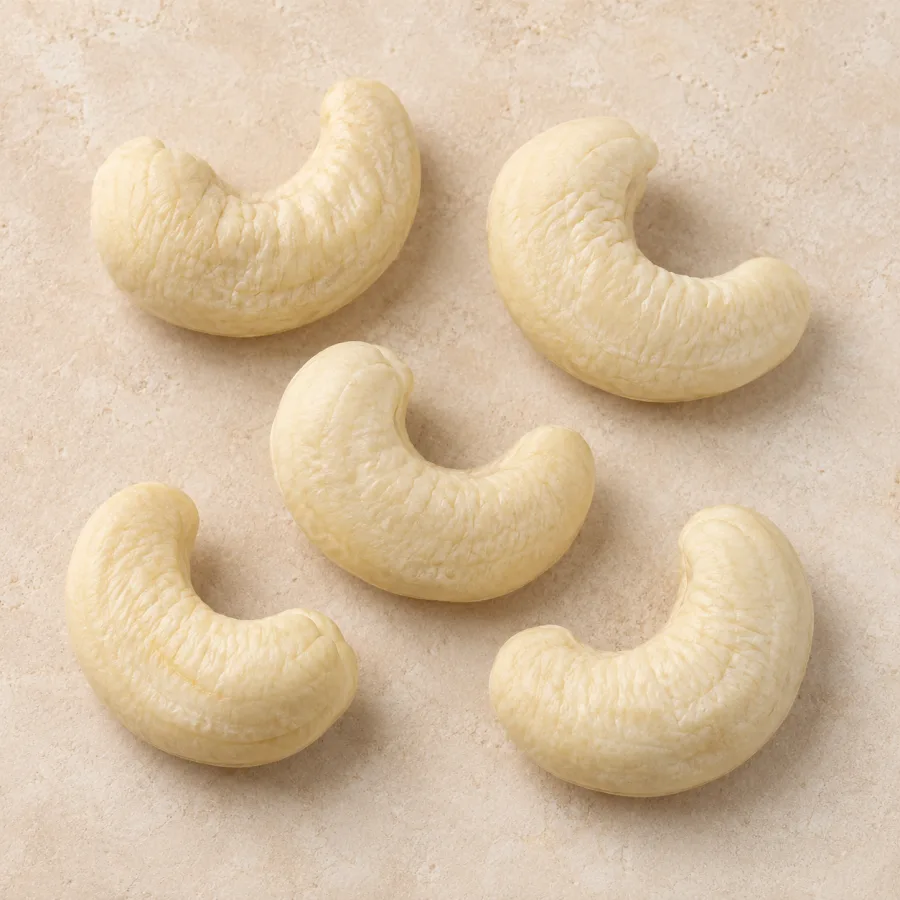
W180
Extra-large, full-bodied whole kernels for premium presentation.
Ask about W180 availability →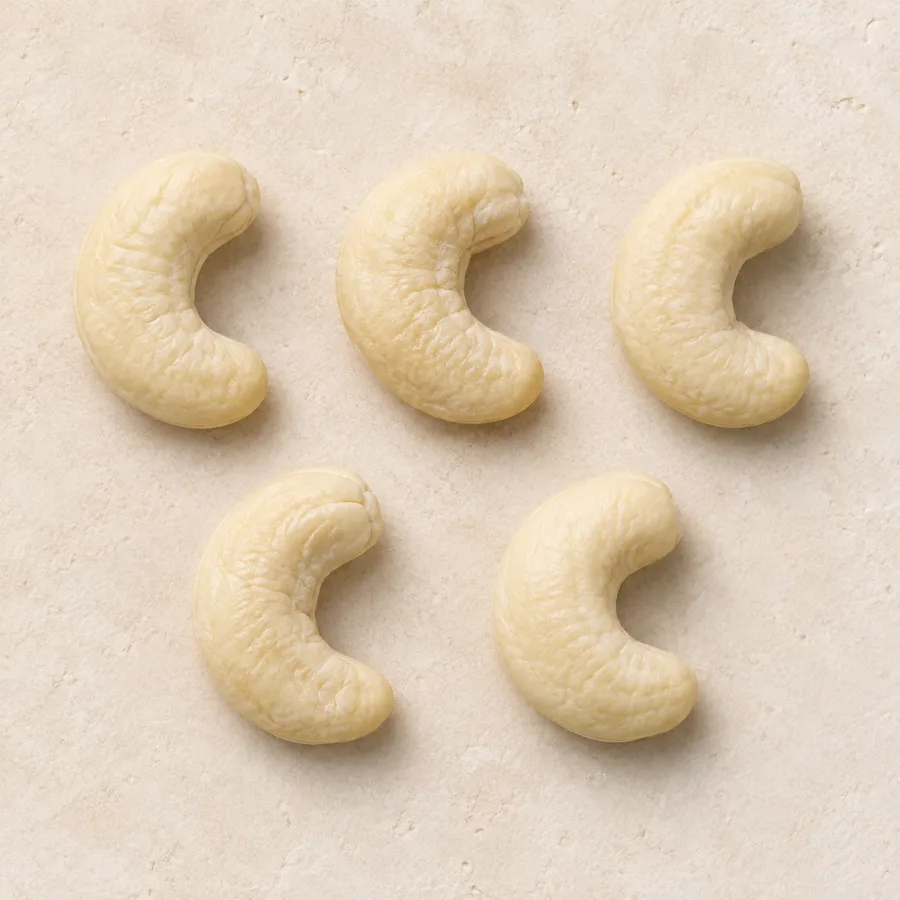
W210
Large jumbo kernels with a generous, consistent appearance.
Ask about W210 availability →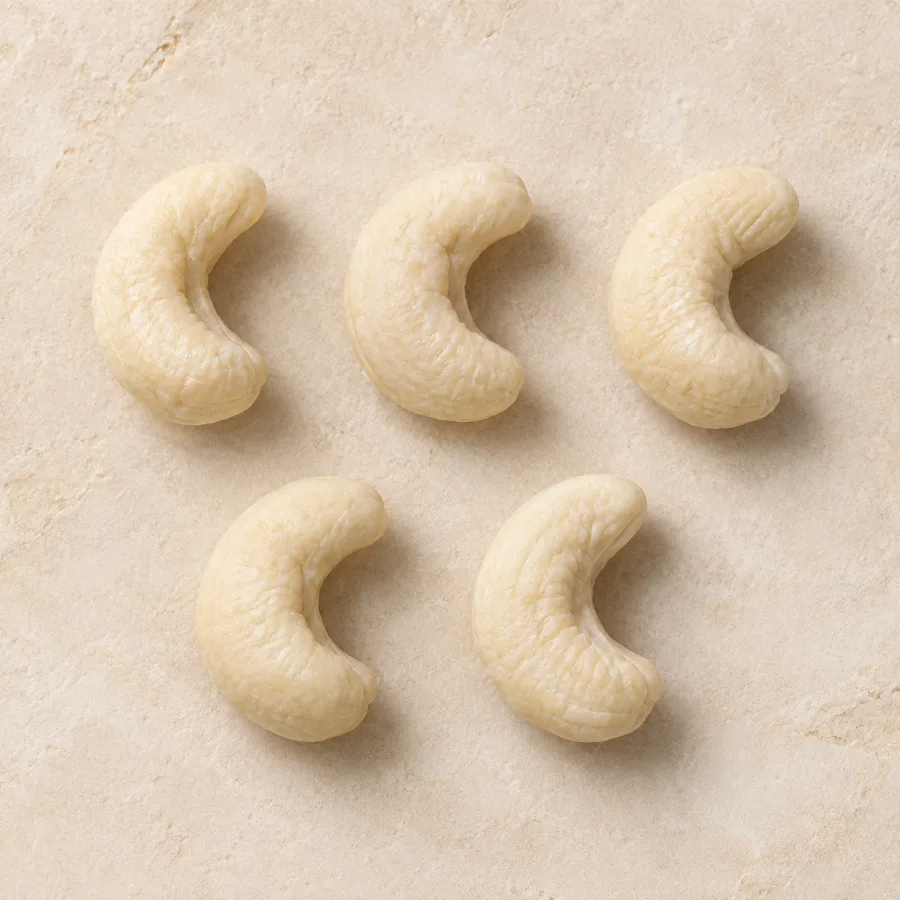
W240
Large whole kernels suited to premium retail and gifting.
Ask about W240 availability →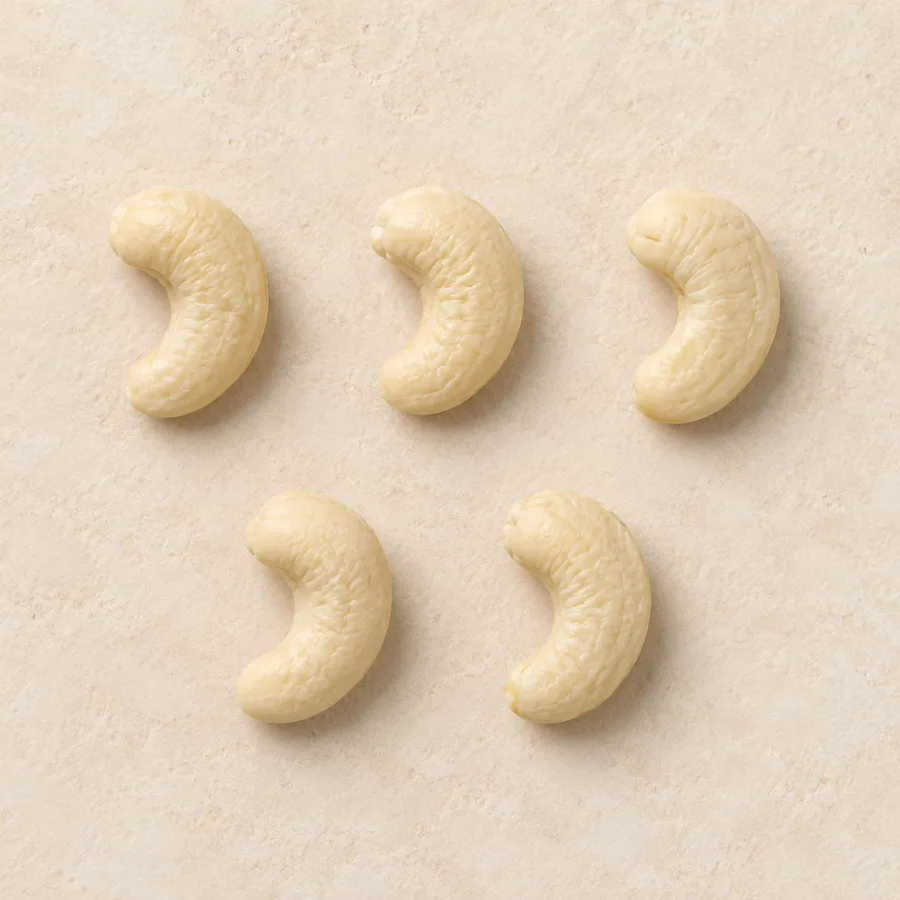
W320
A popular, versatile whole kernel for everyday retail use.
Ask about W320 availability →Representative images for visual guidance only. Natural colour, curvature and surface appearance vary by crop and batch.
HOW BUYERS COMMONLY CHOOSE
Match the grade to the presentation.
| Grade | Relative size | Often considered for | Buyer perspective |
|---|---|---|---|
| W180 | Extra large | Premium gifting, luxury presentation and visible toppings | Choose when kernel size is a central part of the product experience. |
| W210 | Large | Premium packs, gifting and hospitality presentation | A bold visual presence with more pieces per pack than W180. |
| W240 | Large / medium-large | Premium retail packs, snack mixes and gifting | A practical middle ground when appearance and pack economics both matter. |
| W320 | Medium | Everyday retail, roasting, flavouring and general food use | A versatile whole grade that APEDA describes as the most popular. |
Reference: Agricultural and Processed Food Products Export Development Authority (APEDA) — Cashew. Final buying decisions should use the supplier’s current specification, sample and quotation.
SIZE IS ONLY ONE PART
What else should a buyer check?
A grade name helps describe the kernel, but a serious purchase specification should cover more than size.
Wholeness & appearance
Confirm the required whole-kernel tolerance, colour expectation and acceptable level of natural surface variation.
Freshness & handling
Ask about the current batch, packing format, storage conditions and dispatch timeline.
Application
Tell the supplier whether the kernels are for retail, roasting, flavouring, gifting, sweets, bakery or food production.
QUICK BUYER CHECKLIST
Before requesting a quotation.
Sharing a clear requirement makes grade, pack and pricing discussions faster.
- Name the preferred gradeFor example W240 or W320—or ask for a recommendation based on your application.
- State the required quantityInclude trial quantity and expected repeat volume where relevant.
- Explain the end useRetail, roasting, gifting, bakery, sweets, hospitality or another application.
- Confirm packaging needsBulk supply, 100 g or 200 g packs, or a private-label discussion.
- Request current detailsAvailability, specification, sample, quotation and estimated delivery timeline.
COMMON QUESTIONS
Cashew grades, simply answered.
Is W180 always better than W320?
No. W180 is larger, but “better” depends on the application, budget, current batch and required presentation. W320 can be the more practical whole grade for everyday retail or roasting.
Does the grade number describe taste?
No. The W number is primarily a size-grade indicator for whole kernels. Taste and freshness also depend on the raw material, processing, storage and batch condition.
Can natural cashews vary within the same grade?
Yes. Cashews are agricultural products, so natural colour, curvature and surface appearance can vary. A current sample and written specification help align expectations.
What if I need broken pieces or powder?
Grades such as JK, K, BB and powder serve different processing and food-production uses. See our full visual range or contact the team with your application.
WHOLESALE & PRIVATE LABEL
Cashews for your business.
Wholesale orders, private labels and dealership opportunities.
Let’s find the right cashew products for your business.